
Hearing Aid Usage Statistics: Who Wears Them and Why Adoption Is Rising
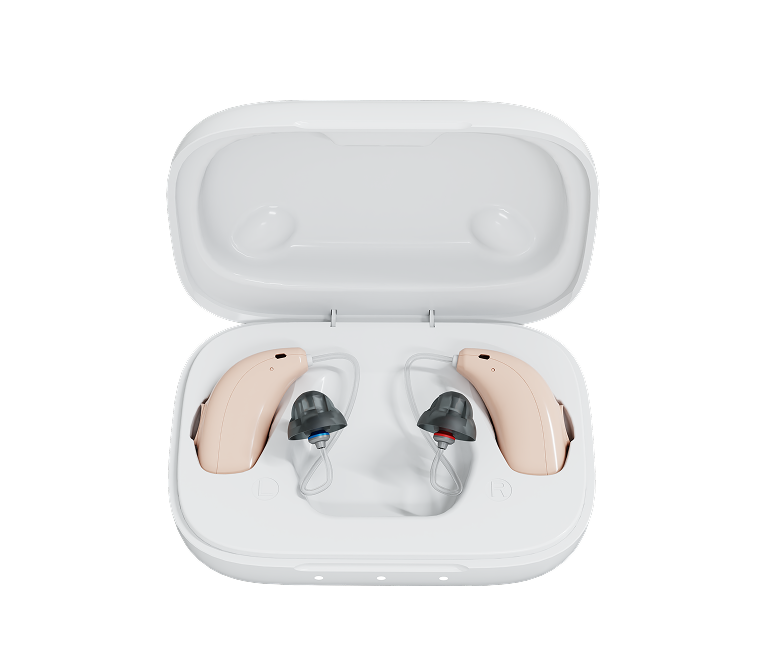
About 9.1% of U.S. adults, roughly 30 million people, self-report hearing difficulty [1]. The full picture is larger still: the Hearing Loss Association of America estimates that more than 50 million Americans, about 1 in 7 people, have some degree of hearing loss [7]. Yet for decades, the majority of people who noticed a problem did nothing about it.
That’s changing. Among adults who self-report hearing difficulty, 39.1% (roughly 12 million Americans) now use hearing aids, representing the highest adoption rate ever recorded in MarkeTrak history [1]. Adoption has grown steadily over the past decade and accelerated sharply since the FDA opened the over-the-counter (OTC) market in 2022 [1, 5].
Hearing aid usage statistics in 2026 tell a story that goes beyond devices. They reveal who’s taking action on their hearing health, why they’re doing so earlier than at any previous point in history, and which forces are reshaping a market that historically left millions of people underserved. This piece draws on data from MarkeTrak 2025, the Hearing Industries Association (HIA), and the National Institute on Deafness and Other Communication Disorders (NIDCD) to paint a current picture of the landscape.
Hearing Aid Usage Statistics: The Current Picture
The table below presents the most important hearing aid usage statistics from 2026 research at a glance.
Key Hearing Aid Usage Statistics
Metric
Statistic
Source
U.S. adults self-reporting hearing difficulty
~30 million (9.1% of population)
MarkeTrak 2025 [1]
Americans with any measurable hearing loss
More than 50 million (~1 in 7 people)
HLAA [7]
Estimated hearing aid wearers (U.S.)
~12 million
MarkeTrak 2025 [1]
Overall hearing aid adoption rate
39.1% of those with self-reported hearing difficulty
MarkeTrak 2025 [1]
OTC market share of total adoption
5.7%
MarkeTrak 2025 [1]
Average years before seeking help (traditional channel)
12.7 years
MarkeTrak 2025 [1]
Average years before seeking help (OTC channel)
5.3 years
MarkeTrak 2025 [1]
One of the most telling numbers in that table is the gap in time to action. People who ultimately use traditional prescription hearing aids wait an average of 12.7 years from the onset of hearing difficulty before doing something about it. Those who use OTC devices act in roughly half that time [1]. OTC access is not just expanding who can afford hearing support. It’s also compressing the window in which people decide to get it.
Who Uses Hearing Aids: Hearing Aid User Demographics by Age, Gender, and Income
Hearing aid usage isn’t distributed evenly across the population. Age is the single strongest predictor of whether someone wears a hearing aid, but income and gender each play a measurable role in shaping who uses them and who hasn’t yet made the switch.
Hearing Aid Usage by Demographic Group
Demographic Group
Typical Usage Level
Notes
Adults 20-44
Lowest adoption tier
Lowest adoption; high rates of undiagnosed loss
Adults 45-64
Rising but below average
Growing awareness; high price sensitivity
Adults 65-74
Above average
Primary adopter cohort
Adults 75-84
Highest consistent usage
Peak sustained usage; strong retention once adopted
Adults 85+
High but variable
Accessibility and technology barriers more prominent
Higher-income households
Meaningfully higher adoption rate
Cost remains the primary filter at lower incomes
Men vs. women
Men show higher hearing loss prevalence
Women adopt at a slightly higher rate
Usage levels reflect adoption patterns by demographic from NIDCD and MarkeTrak 2025 research [1, 2].
The 65-plus cohort accounts for the majority of hearing aid wearers in the United States. That's not because younger adults are immune to hearing difficulty; a meaningful and growing share of people between 45 and 64 has some degree of hearing loss, and noise-related damage is affecting a growing share of younger adults [2]. The pattern reflects how long it takes most people to move from recognizing a problem to acting on it, and how strongly cost shapes that delay.
Cost remains one of the most persistent filters in the landscape. Traditional prescription devices have historically ranged from $2,000 to $8,000 per pair [3]. While OTC options starting under $100 have begun to close the gap, income-driven disparities in adoption haven’t fully disappeared. The gender picture, meanwhile, cuts in two directions: men experience higher rates of hearing loss overall, driven partly by occupational and recreational noise exposure, while women adopt hearing aids at a slightly higher rate than men, 41% versus 39% [1, 2].
Hearing Aid Market Statistics: A Decade of Rising Usage
One of the clearest signs that more Americans are using hearing aids is the adoption rate itself, which has climbed from 30.2% of those with hearing difficulty in 2015 to 39.1% in 2025, the highest level MarkeTrak has ever recorded [1]. The steepest change came after 2022. The FDA's OTC ruling didn't replace demand from the traditional prescription channel; it added new demand from first-time buyers who had no prior pathway into the market. Roughly 70% of OTC users are first-time buyers, compared to 58% in the traditional channel [1]. The result is more people using hearing aids, not the same people switching lanes.
What's Behind Rising Hearing Aid Usage: The Key Adoption Drivers
Several forces are pushing hearing aid adoption higher at once. The biggest long-term driver is simple demographics: the population is aging, and hearing loss climbs with age. But the biggest change of the past few years has been access: in 2022, the FDA created a new category of over-the-counter hearing aids that people can buy directly, without a prescription, exam, or fitting.
Key Drivers of Rising Hearing Aid Usage
Driver
Impact Level
Who It Reaches Most
OTC availability (post-FDA 2022 ruling)
High
Price-sensitive adults; first-time buyers; younger adults
Aging U.S. population
High
Adults 65-80 entering peak hearing-loss years
Cognitive health awareness
High
Adults 55-75 motivated by research linking hearing to dementia
Telehealth and remote hearing support
Moderate
Rural and mobility-limited populations
Retail expansion (Walmart, Walgreens, Target, and other major retailers)
Moderate
Shoppers who prefer in-store access
Expanding Medicare Advantage coverage
Moderate
Lower-income seniors
Reduced stigma and design innovation
Moderate-High
Younger adopters; Boomers who resisted previous device aesthetics
The cognitive health connection is reshaping how adults in their late fifties and sixties think about the timing of intervention. A growing body of research links untreated hearing loss to accelerated cognitive decline and elevated dementia risk [6]. For adults who are actively managing their long-term health, that research is shifting the question from "do I really need hearing aids yet?" to "why would I wait any longer?"
Design innovation and cultural shifts are working alongside all of the above. Hearing aids have evolved from bulky, stigmatized devices to sleek, discreet technology that looks more like premium audio hardware than medical equipment. That shift has lowered one of the most persistent non-financial barriers to adoption across all age groups.
How Audien Hearing Is Expanding Who Gets to Hear Well
The hearing aid usage statistics above describe a market in motion. Audien Hearing is one of the forces moving it.
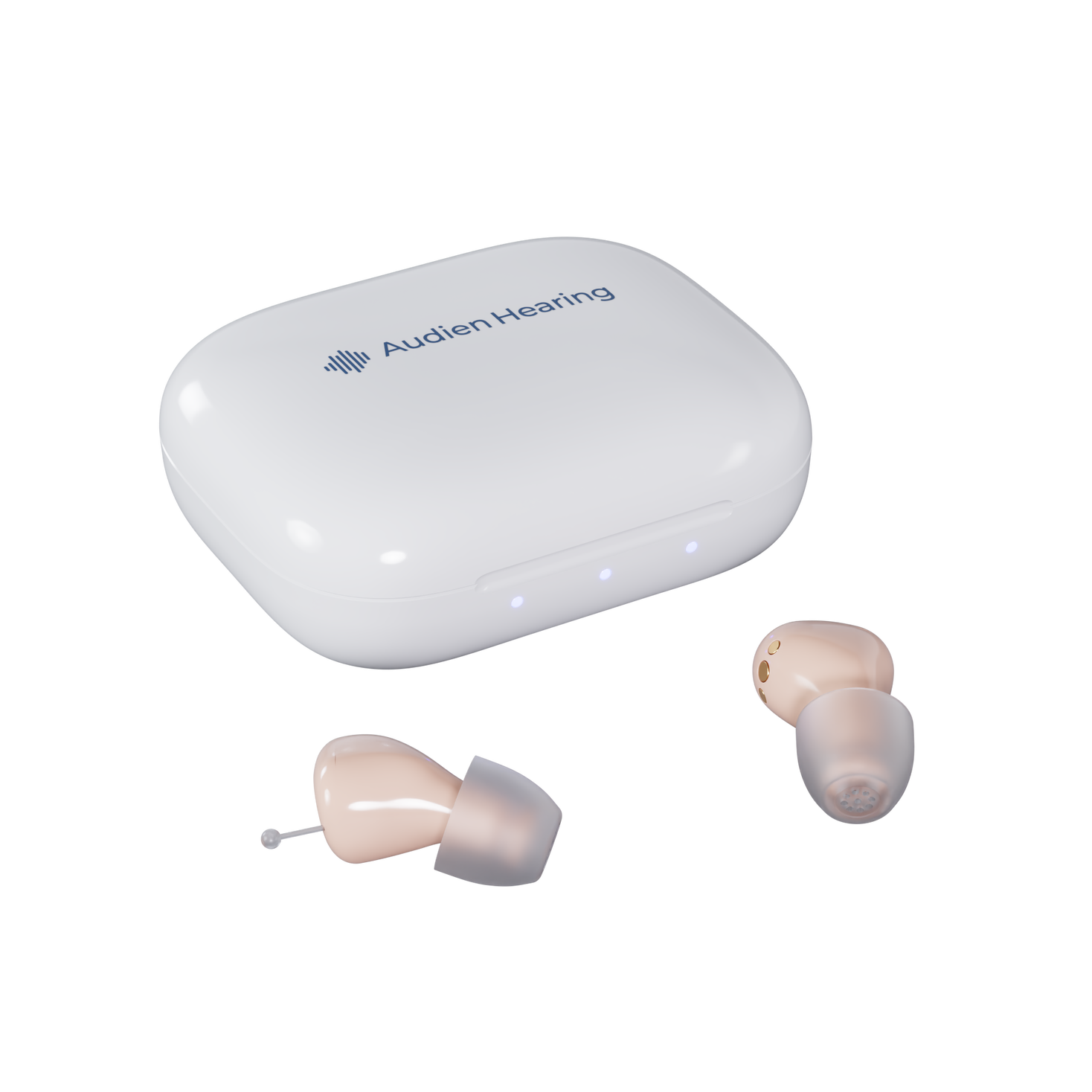
As the #1 OTC hearing aid brand, Audien has reached 2 million happy customers, a figure that tracks closely with the rise in new-user OTC adoption documented in MarkeTrak 2025 [1]. Its audiologist-developed hearing aids start under $100, placing them at the most accessible end of the OTC price spectrum and a fraction of what traditional prescription channels typically charge [3].
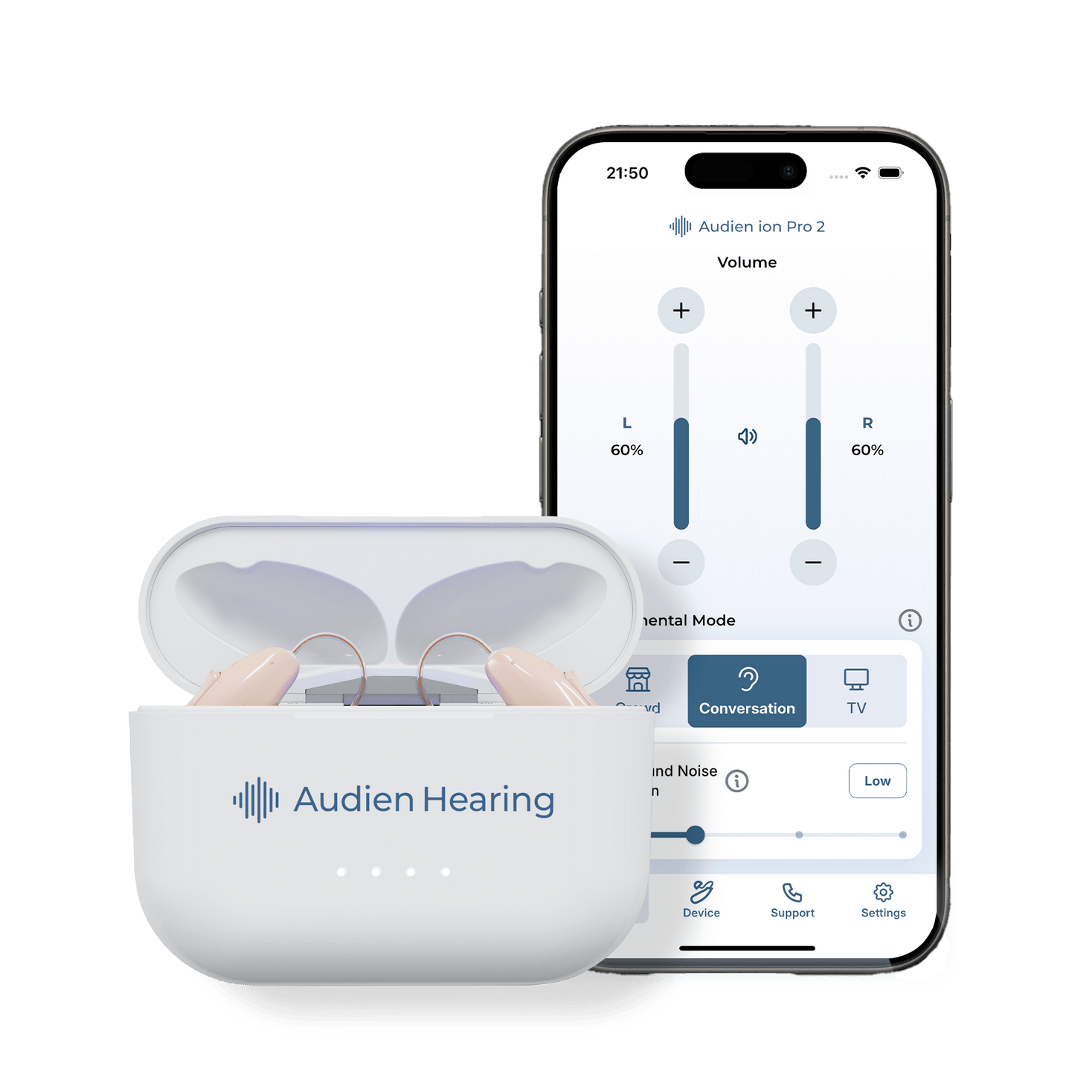
Accessible pricing is only half of the model. Every Audien hearing aid purchase includes a free Audien Sound Check™ appointment, a personalized remote session with a trained hearing specialist who helps with setup and customization, the kind of guidance that was once available only in clinical settings. That pairing of affordability and real professional support shows up in the numbers: fewer than one in five Audien devices comes back, in a category where return rates near 50% are common.
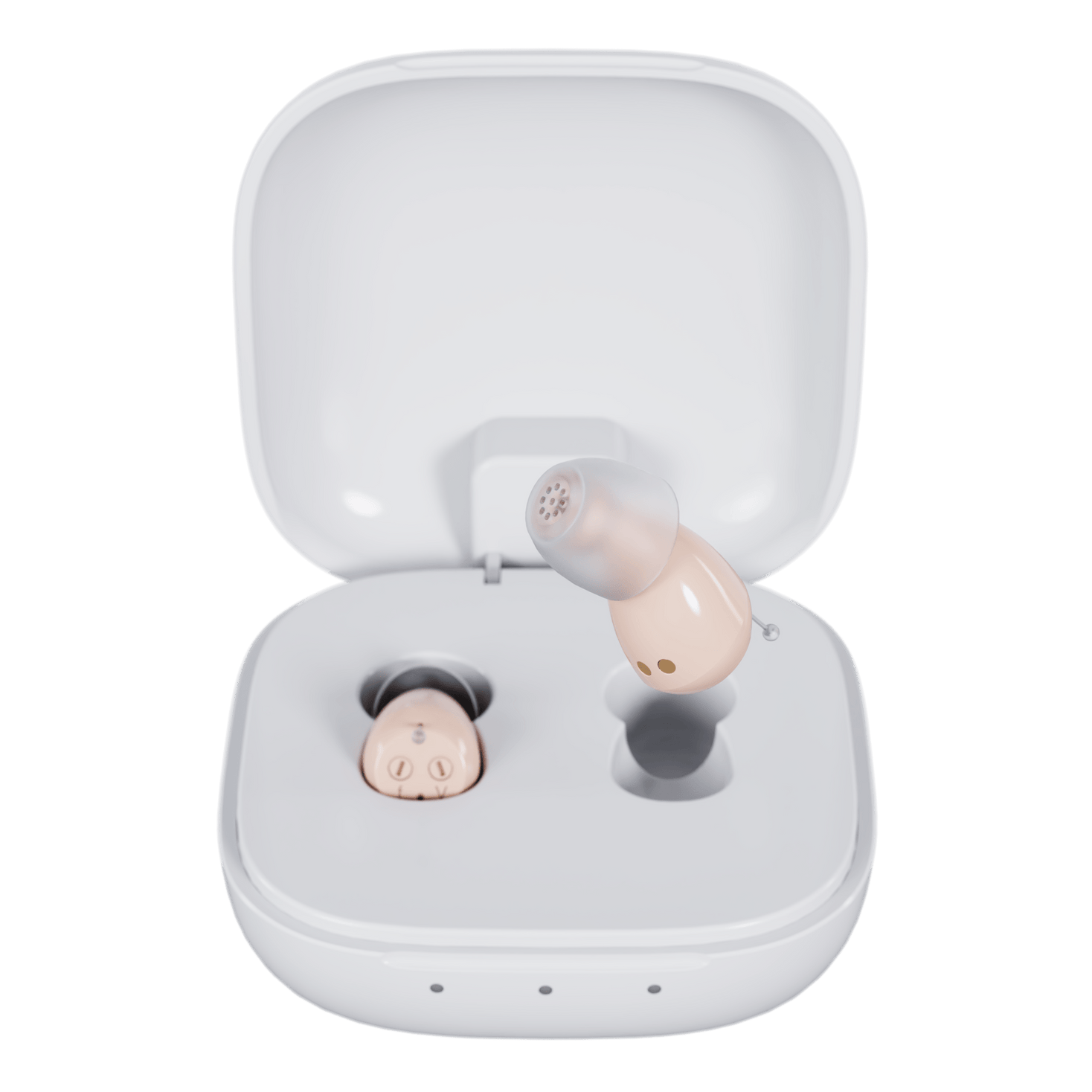
First-time users often stumble on small, fiddly controls. The Atom X removes that barrier with a full touchscreen interface, making adjustments intuitive for people navigating hearing aid technology for the first time. A 45-day risk-free trial means buyers can test real-world performance before fully committing, eliminating the financial risk that has historically kept millions of people from taking the first step.
Audien is available at audienhearing.com as well as at Walgreens, Walmart, CVS, Staples, BJ's, Target, and Giant Eagle, meeting customers wherever they prefer to shop. The brand didn’t simply enter the OTC market. It helped define what hearing health access looks like for the millions of Americans the traditional system never reached.
Looking Ahead
Hearing aid usage statistics in 2026 tell a clear and forward-looking story. More Americans are wearing hearing aids than at any point in recorded history. The demographic base is broad, growing, and increasingly diverse. The forces behind rising adoption are structural: an aging population, a new OTC market, growing cognitive health awareness, and technology designed to fit the lives people are actually living.
With 73.5 million Americans projected to have hearing loss by 2060 [4], the question isn’t whether this market keeps growing. It's how many people will get the support they need before years of missed conversations pile up.
Ready to find out what you’ve been missing? Explore Audien Hearing's full lineup of audiologist-developed hearing aids, each backed by a 45-day risk-free trial and a free Audien Sound Check™ appointment included with every purchase.
No prescription required. No doctor visit needed. Just a simpler path to hearing well.
Questions? Our team is here 7 days a week. Call us or visit our support page to get started today.
Sources
MarkeTrak 2025, "Hearing Aid Adoption in the OTC Hearing Aid Era: Market Trends and Consumer Insights." Seminars in Hearing, October 2025. https://pmc.ncbi.nlm.nih.gov/articles/PMC12638189/
NIDCD, "Age-Related Hearing Loss (Presbycusis)," 2023. https://www.nidcd.nih.gov/health/age-related-hearing-loss
ConsumerAffairs, "How Much Do Hearing Aids Cost?" 2025. https://www.consumeraffairs.com/health/hearing-aid-statistics.html
National-study projection, Goman AM, Reed NS, Lin FR. "Addressing Estimated Hearing Loss in Adults in 2060." JAMA Otolaryngology–Head & Neck Surgery, 2017;143(7):733–734. https://jamanetwork.com/journals/jamaotolaryngology/fullarticle/2606784
FDA, "FDA Finalizes Historic Rule Enabling Access to Over-the-Counter Hearing Aids for Millions of Americans," August 2022. https://www.prnewswire.com/news-releases/fda-finalizes-historic-rule-enabling-access-to-over-the-counter-hearing-aids-for-millions-of-americans-301606681.html
Johns Hopkins Medicine, "The Hidden Risks of Hearing Loss," 2026. https://www.hopkinsmedicine.org/health/wellness-and-prevention/the-hidden-risks-of-hearing-loss
Hearing Loss Association of America, "Hearing Loss by the Numbers." 2025. https://www.hearingloss.org/understanding-hearing-loss/hearing-loss-101/hearing-loss-by-the-numbers/


